Start here
If you are new to Rose — or new to this stage of life — this is the page to read first. Everything else will make more sense after this.
Rose
"I built this because I needed it. I was experiencing things I could not explain and could not find honest answers anywhere. If that is where you are — you are in the right place. What you are experiencing has a name. It has a cause. And there are real options. Let us start from the beginning."
When it starts
Typically 40s, sometimes late 30s
How long it lasts
2 to 10 years (average 4-7)
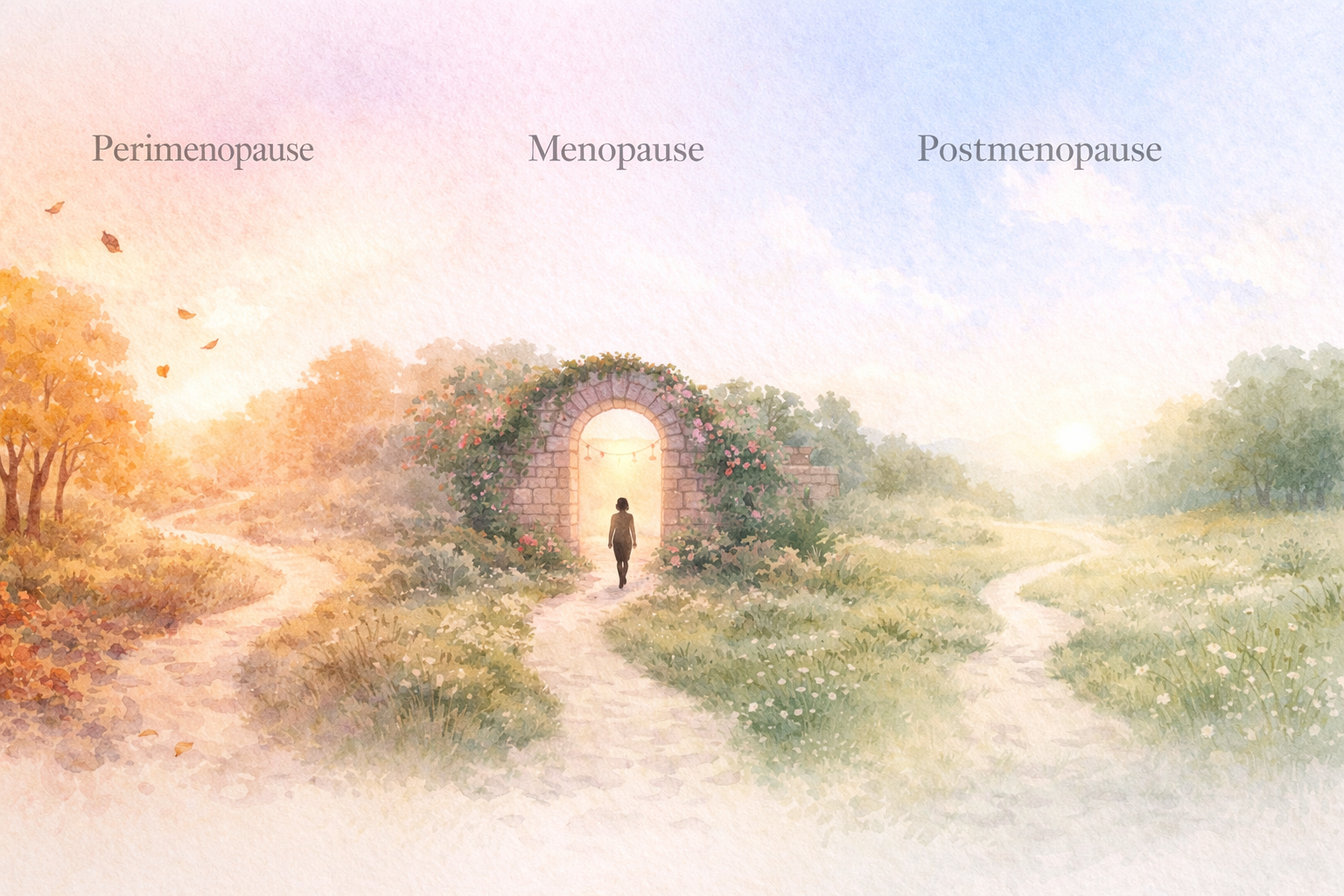
Perimenopause is the transition period — your body is preparing for menopause but has not arrived yet. Hormones fluctuate wildly and unpredictably. Estrogen and progesterone do not decline smoothly — they spike and crash, sometimes dramatically, which is why symptoms can feel so erratic.
Your periods may become irregular — heavier, lighter, closer together, or further apart. You are still ovulating (sometimes) and can still get pregnant. You are in perimenopause if your cycles have changed but have not stopped entirely.
Most common symptoms in perimenopause
Irregular periodsHot flashesNight sweatsMood swingsRage and irritabilityBrain fogSleep disruptionBreast tendernessHeadachesAnxiety
The most disorienting stage. Symptoms can appear years before you connect them to perimenopause — because nobody told you they would start this early.
When it is confirmed
12 months without a period
Average age
51 in the UK and US
Technically menopause is a single day — the day you reach 12 consecutive months without a period. You only know you have reached it in retrospect. Before that day you are in perimenopause. After it you are postmenopausal.
The average age is 51 but the normal range is 45-55. Before 45 is considered early menopause. Before 40 is Premature Ovarian Insufficiency (POI) — a distinct condition that warrants different treatment.
You cannot be diagnosed with menopause until after it has happened. Blood tests can suggest it but are not conclusive during perimenopause because hormone levels fluctuate too much.
When it starts
The day after menopause is confirmed
How long it lasts
The rest of your life
Postmenopause is everything after. Estrogen stabilises at a new, lower level. For many women the chaotic fluctuations of perimenopause calm down — the storms become less frequent. But some symptoms, particularly vaginal changes and genitourinary symptoms, tend to worsen over time without treatment.
This is also the stage when long-term health risks become more relevant — bone density, cardiovascular health, and metabolic changes all require attention. The good news: evidence-based interventions for all of these are available.
What to focus on in postmenopause
Bone densityCardiovascular healthMetabolic healthVaginal healthCognitive healthMuscle maintenance
Not the end of anything. The beginning of a different chapter — and one that can be very good with the right information and the right support.
Perimenopause can start in your late 30s
The average age of the final period is 51. But perimenopause — the transition leading up to it — begins on average 4-7 years earlier. Many women in their early-to-mid 40s are experiencing classic perimenopausal symptoms and have no idea. If your mood, sleep, or cycles changed in your 40s without explanation, this is worth knowing.
Symptoms can appear before periods change
Brain fog, rage, anxiety, sleep disruption, and joint pain can all begin years before periods become irregular. Many women are diagnosed with depression, anxiety disorders, or chronic fatigue when what they are actually experiencing is early perimenopause. If symptoms started in your 40s and no other cause has been found, ask specifically about perimenopause.
Blood tests during perimenopause are often inconclusive
FSH and estradiol levels fluctuate so dramatically during perimenopause that a single blood test cannot confirm or rule it out. A "normal" result does not mean you are not perimenopausal. Many women are told their hormones are fine when the test simply caught them on a good day. Symptoms and timing matter as much as lab values.
HRT is not the dangerous treatment it was made out to be
A 2002 study (the Womens Health Initiative) scared a generation of women and doctors away from HRT with headline findings that have since been significantly revised and reinterpreted. For most healthy women under 60 or within 10 years of menopause, the benefits of HRT substantially outweigh the risks. If you were told HRT is dangerous without a thorough discussion of your individual risk profile — that conversation deserves to be revisited.
You are allowed to advocate for yourself
Many women are dismissed, undertreated, or told their symptoms are normal without being offered effective options. You are allowed to ask for a second opinion. You are allowed to name menopause specifically. You are allowed to ask about HRT, testosterone, and local vaginal estrogen by name. Rose exists partly because too many women were sent away without answers. Do not leave without them.
From Rose
"This season is disorienting precisely because nobody prepared you for it. But you are not at the beginning of something bad — you are in the middle of a transition, and transitions end. The women who come through this best are the ones who get honest information, find what works for their body, and refuse to accept dismissal. You are already doing that. You found Rose. Welcome."